
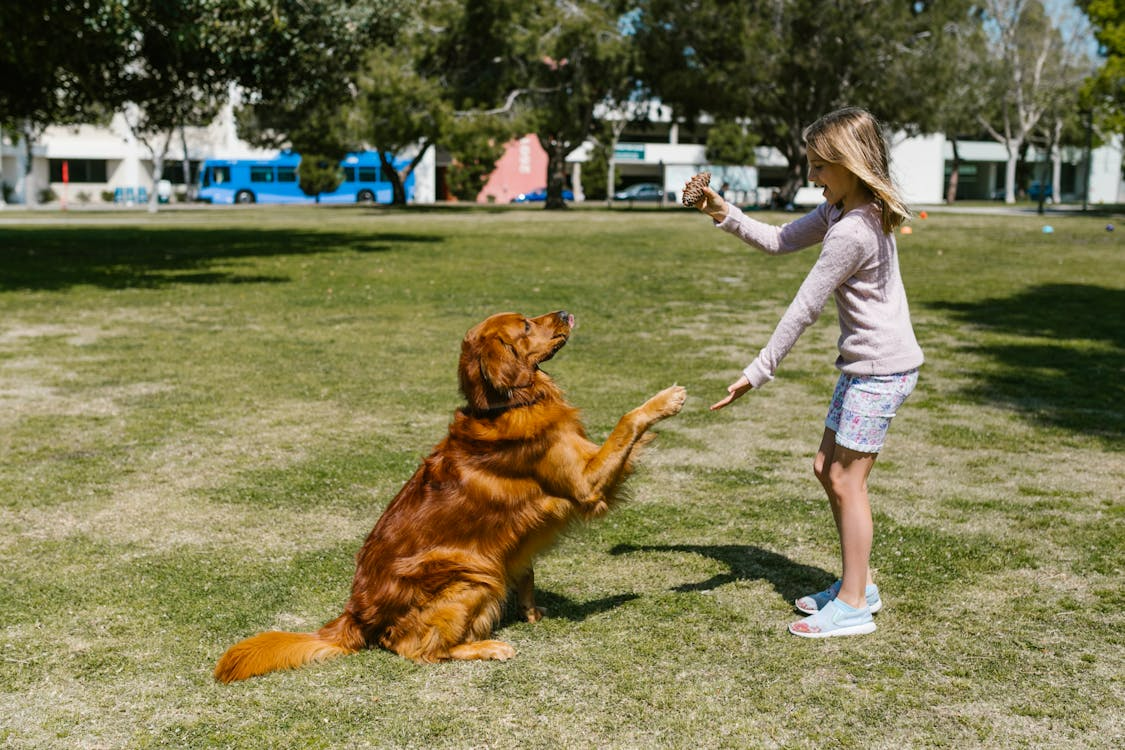
Golden Retrievers are more than just loyal family pets—they’re gentle emotional anchors for children. Their calm demeanor, affectionate nature, and intuitive sensitivity make them ideal companions for kids learning to navigate and manage their emotions. Especially for children facing anxiety, ADHD, or behavioral challenges, a Golden Retriever can become a steady source of support.
Creating a Safe Emotional Space
Children often feel more comfortable expressing emotions around animals than adults. Golden Retrievers provide a safe, nonjudgmental space where kids can cry, vent, or simply be themselves. This kind of emotional freedom fosters self-awareness and teaches kids how to name, understand, and work through their feelings.
Calming the Body, Calming the Mind

Interacting with a dog has measurable physiological effects. Petting a Golden Retriever can lower cortisol levels and increase oxytocin, which naturally calms the body. For a child who is dysregulated or having a meltdown, the dog’s presence provides sensory input—like the feeling of fur or the pressure of a cuddle—that helps ground and soothe them in the moment.
Read more: Why Do Our Pets Make Us Feel Good?
The Comfort of Routine and Responsibility
Golden Retrievers thrive on structure, and so do kids. Taking care of a pet—feeding, walking, grooming—gives children a sense of responsibility and routine. These daily patterns bring predictability into their lives, which can reduce anxiety and increase a child’s ability to manage change and transitions more smoothly.
Emotional Intuition in Action
What sets Golden Retrievers apart is their ability to sense emotional changes. Many parents describe their dog intuitively climbing into their child’s lap when they sense distress or anxiety. This kind of unspoken support helps children learn emotional regulation techniques by example—like taking a break, seeking comfort, or shifting focus.
Building Social Confidence
Golden Retrievers can also ease social difficulties. Children who struggle with making friends often find a best friend in their dog. This bond boosts confidence and reduces feelings of loneliness. Because dogs are great ice-breakers, they also help children practice social interaction in a low-pressure way, improving communication skills over time.
Read more: Can Pets Help Children With Their Emotional and Social Skills?
A Lasting Emotional Impact
Golden Retrievers are more than playmates—they’re emotional lifelines. They teach empathy, patience, and connection in ways that words can’t. As children grow, the lessons they learn through their relationship with their dog—how to calm down, how to care for someone, how to feel safe—carry over into school, friendships, and life.
Conclusion
A Golden Retriever may just be one member of the family, but their impact can be profound. In helping children regulate emotions, develop empathy, and find comfort during difficult moments, these dogs become quiet heroes in a child’s emotional journey. Their love is constant—and their presence, transformative.
Do you own an assistance animal? Register your pet today. The Service Animal Registry of California invites you to have your assistance animal registered in order to designate its status. We also encourage you to take our online classes so you can be fully aware of your rights and gain more knowledge about your support animal.
Finally, we present to you our book entitled, “ASSISTANCE ANIMAL LAWS: LEARN YOUR RIGHTS REGARDING SERVICE ANIMALS, EMOTIONAL SUPPORT ANIMALS, THERAPY PETS, AND OTHER DOGS, CATS, AND ASSISTANCE ANIMALS” to provide you with a complete education on assistance animals. Purchase your copy of the book by clicking the image below.