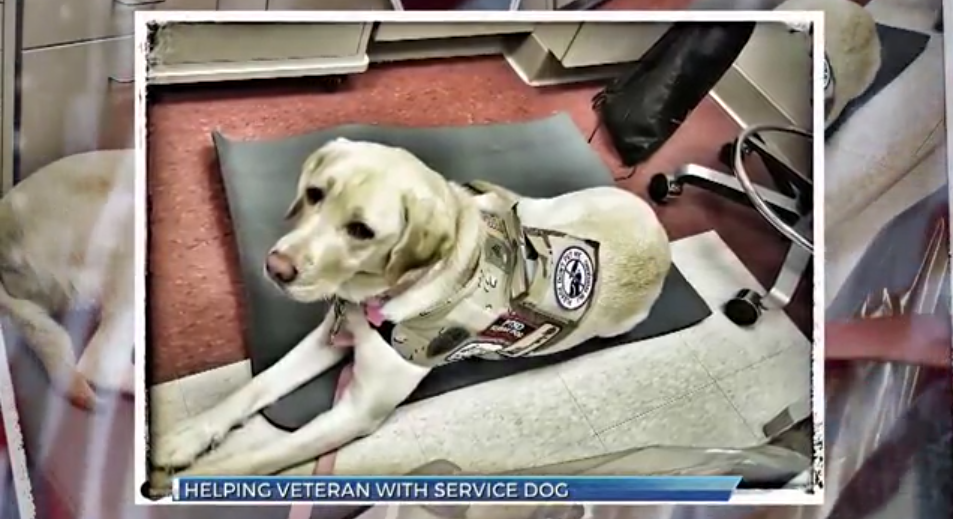
Why are assistance animals good for kids and people in general?

animals good for kids

Assistance animals have become widely popular in the United States, as more people have seen their benefits for improving their mental and emotional health. For sure, you’ve heard of reports of emotional support animals such as dogs, cats, pigs, miniature horses, and ducks being used to assist patients with PTSD and autism in their day-to-day lives.

Despite assistance animals’ popularity, we can all agree that animals, in general, have helped people in many ways. Whether it’s an emotional support animal or simply a pet, animals help ease feelings of loneliness. You get to take them for a walk which allows you to exercise.

When it comes to children with or without developmental disorders, interaction with assistance animals has been shown to increase learning motivation, social skills, empathy, a sense of responsibility, and self-esteem. Therapy animals also help decrease pain among hospitalized children.

As owners of assistance animals, we need to make sure that our furry companions get all the care and training they need to stay safe and healthy so they can continue keeping us happy.

Are you an owner of an assistance animal?

The Service Animal Registry of California invites you to have your assistance animal registered in order to designate its status. We also encourage you to take our online classes so you can be fully aware of your rights and gain more knowledge about your support animal.

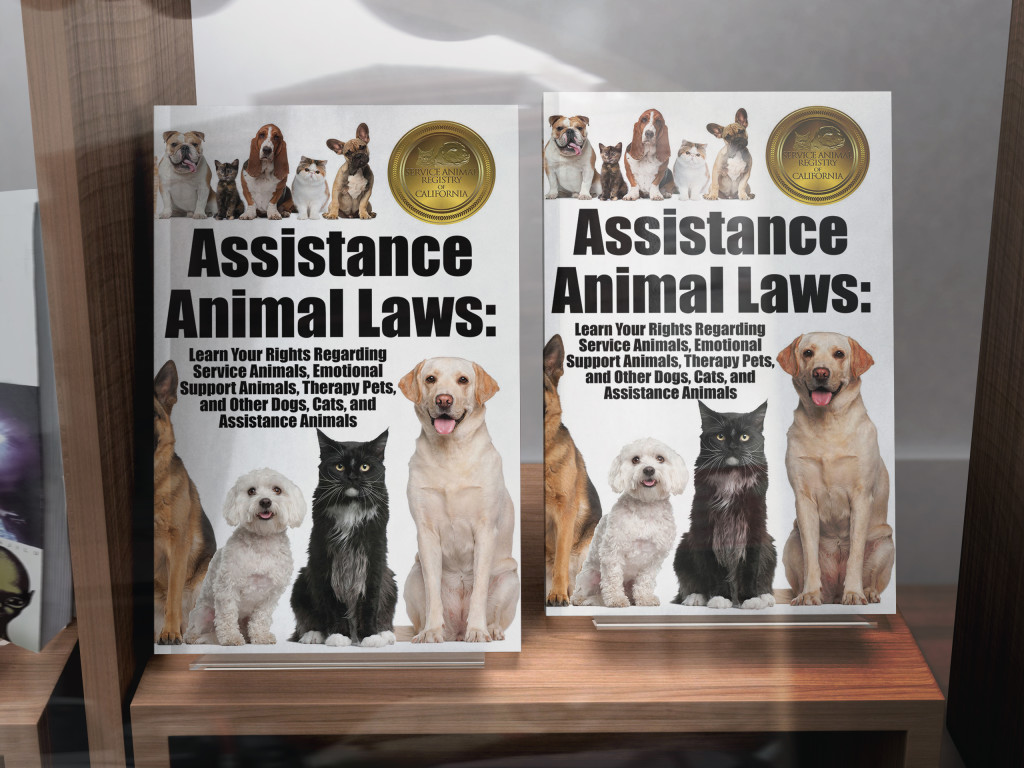
Finally, we present to you our book entitled, “ASSISTANCE ANIMAL LAWS: LEARN YOUR RIGHTS REGARDING SERVICE ANIMALS, EMOTIONAL SUPPORT ANIMALS, THERAPY PETS, AND OTHER DOGS, CATS, AND ASSISTANCE ANIMALS” to provide you with a complete education on assistance animals.

Purchase your copy of the book by clicking the text or image below.

ASSISTANCE ANIMAL LAWS: LEARN YOUR RIGHTS REGARDING SERVICE ANIMALS, EMOTIONAL SUPPORT ANIMALS, THERAPY PETS, AND OTHER DOGS, CATS, AND ASSISTANCE ANIMALS

What do you do when someone violates your rights?

violation rights

Not everyone understands assistance animal laws. Even if you are very clear with others and take all the suggested actions to communicate your needs and requests for accommodation, it is possible for your rights to be ignored or violated by other people and businesses such as:

  • Landlords, Property Managers, or Hotels
  • Airlines or Public Ground Transit Providers
  • Staff at Restaurants, Movie Theaters, Parks, and Shops

You have a lot of choices in how you respond to a person violating your rights. Not all people understand their obligations or your rights. Some violations are out of ignorance, not spite or ill will. Other violations might be out of anger or intentional. You can probably guess or sense which it is and can react accordingly.

If the person violating your rights is doing so out of ignorance about the law, brief education can sometimes solve the issue.

If the person violating your rights is doing so out of anger, or harasses you, or repeatedly violates your rights, or is threatening your peace of mind, you can take more serious action such as:

  • Giving the person a signed Notice of Violation.
  • Reporting the person to the appropriate agency.
  • Seeking legal assistance from a free “pro bono” attorney services organization such as Legal Aid.
  • Hiring a private attorney to help you sue the violator for your damages, such as emotional distress and any loss you suffered.

Are you an owner of an assistance animal?

The Service Animal Registry of California invites you to have your assistance animal registered in order to designate its status. We also encourage you to take our online classes so you can be fully aware of your rights and gain more knowledge about your support animal.

Finally, we present to you our book entitled, “ASSISTANCE ANIMAL LAWS: LEARN YOUR RIGHTS REGARDING SERVICE ANIMALS, EMOTIONAL SUPPORT ANIMALS, THERAPY PETS, AND OTHER DOGS, CATS, AND ASSISTANCE ANIMALS” to provide you with a complete education on assistance animals.

Purchase your copy of the book by clicking the text or image below.

ASSISTANCE ANIMAL LAWS: LEARN YOUR RIGHTS REGARDING SERVICE ANIMALS, EMOTIONAL SUPPORT ANIMALS, THERAPY PETS, AND OTHER DOGS, CATS, AND ASSISTANCE ANIMALS

Posted in FAQ

What are the rights of an employer on assistance animals?

employer rights assistance animals

An employer has certain rights and is allowed to do the following:

1. Request reasonable evidence of the employee’s need for the assistance animal, such as a medical professional’s note. However, the employer may not ask detailed medical questions which would be an invasion of privacy rights and must consider other reasonable evidence if there is no medical professional note available.

2. Deny/eject the assistance animal if it causes an unreasonable nuisance or public safety hazard. For example, if there is a barking habit, flea infestation, evidence of an actual disease, aggressive behavior, feces or urine contamination due to the owner/handler neglecting to clean up, etc. Note that these must be actual rather than merely potential issues.

3. Refuse to accommodate the request for an assistance animal if it would cause an undue financial or another burden on the employer. For example, if the employer’s insurance carrier would cancel the insurance policy if a certain breed of dog, such as a pit bull or chow breed, were kept in the workplace, or if the accommodation would require extensive costs that would be considered objectively unreasonably high, such as physical alterations or construction.

Are you an owner of an assistance animal?

The Service Animal Registry of California invites you to have your assistance animal registered in order to designate its status. We also encourage you to take our online classes so you can be fully aware of your rights and gain more knowledge about your support animal.

Finally, we present to you our book entitled, “ASSISTANCE ANIMAL LAWS: LEARN YOUR RIGHTS REGARDING SERVICE ANIMALS, EMOTIONAL SUPPORT ANIMALS, THERAPY PETS, AND OTHER DOGS, CATS, AND ASSISTANCE ANIMALS” to provide you with a complete education on assistance animals.

Purchase your copy of the book by clicking the text or image below.

ASSISTANCE ANIMAL LAWS: LEARN YOUR RIGHTS REGARDING SERVICE ANIMALS, EMOTIONAL SUPPORT ANIMALS, THERAPY PETS, AND OTHER DOGS, CATS, AND ASSISTANCE ANIMALS

Posted in FAQ

Can an employer accommodate an assistance animal in the workplace?

employers rights

There is only one type of assistance animal which an employer must accommodate in the workplace: Service animals.

Emotional support animals or therapy animals are usually not accommodated unless the employer voluntarily chooses to allow these two categories of assistance animals.

When it comes to an employer’s obligations, the Americans with Disabilities Act (ADA) requires that employers make reasonable accommodation to the known physical or mental limitations of otherwise qualified individuals with disabilities, unless it results in undue hardship.

Service Animal requests are usually accommodated by employers unless the employer can show a reason why it creates a danger to others or undue hardship. For example, a Service Animal can likely be denied access to food-prep areas or locations with dangerous machinery.

Are you an owner of an assistance animal?

The Service Animal Registry of California invites you to have your assistance animal registered in order to designate its status. We also encourage you to take our online classes so you can be fully aware of your rights and gain more knowledge about your support animal.

Finally, we present to you our book entitled, “ASSISTANCE ANIMAL LAWS: LEARN YOUR RIGHTS REGARDING SERVICE ANIMALS, EMOTIONAL SUPPORT ANIMALS, THERAPY PETS, AND OTHER DOGS, CATS, AND ASSISTANCE ANIMALS” to provide you with a complete education on assistance animals.

Purchase your copy of the book by clicking the text or image below.

ASSISTANCE ANIMAL LAWS: LEARN YOUR RIGHTS REGARDING SERVICE ANIMALS, EMOTIONAL SUPPORT ANIMALS, THERAPY PETS, AND OTHER DOGS, CATS, AND ASSISTANCE ANIMALS

Posted in FAQ

An airline denied a blind woman and her seeing-eye dog accommodation

blind woman and service dog

Photo courtesy: Bangor Daily News

Sue Martin, 61, is a blind woman who was accompanied by her 3-year old service dog named Quan (a German Shepherd) and her husband on her flight from Bangor. The three of them were able to fly from Bangor to Washington, DC but had trouble doing so during the second leg of their flight.

What happened was that they had trouble finding a seating in American Airlines that was big enough for Quan to lay down. The AA flight attendant refused to offer a larger seating after Martin made a request. Martin also suggested if she could get a first-class ticket and the attendant replied that dogs are prohibited in first class. A passenger in first class offered his seat. After Martin accepted, an American Airline supervisor came and directed Martin, Quan, and her husband off the flight.

Martin asked why she has been removed and the supervisor responded that the crew decided that their presence on the plane was unsafe and that they had to leave. After returning home by taking another airline flight, Martin filed a complaint against American Airlines for the incident. The company made an apology and stated that Martin’s allegations would be investigated.

According to Robert Mann of R.W. Mann & Co. in Port Washington, N.Y., there probably has been a confusion with the recognition of Quan as a legitimate service dog. The U.S. Department of Transportation accepted Martin’s complaint. The investigation is still going on. Martin would also like to be reimbursed for the $80 cab fare she spent while traveling with Quan and her husband to a different airport.

Article source: Bangor Daily News

Are you an owner of an assistance animal?

The Service Animal Registry of California invites you to have your assistance animal registered in order to designate its status. We also encourage you to take our online classes so you can be fully aware of your rights and gain more knowledge about your support animal.

Finally, we present to you our book entitled, “ASSISTANCE ANIMAL LAWS: LEARN YOUR RIGHTS REGARDING SERVICE ANIMALS, EMOTIONAL SUPPORT ANIMALS, THERAPY PETS, AND OTHER DOGS, CATS, AND ASSISTANCE ANIMALS” to provide you with a complete education on assistance animals.

Purchase your copy of the book by clicking the text or image below.

ASSISTANCE ANIMAL LAWS: LEARN YOUR RIGHTS REGARDING SERVICE ANIMALS, EMOTIONAL SUPPORT ANIMALS, THERAPY PETS, AND OTHER DOGS, CATS, AND ASSISTANCE ANIMALS

Can a cat be called a service animal?

cats are not service animals

Cats are cute, amazing, and helpful in some ways, but disabled people cannot rely on cats to help them cross the street, detect dangerously low blood sugar levels, and bring them medication.

According to the Americans with Disabilities Act (ADA), a service animal can be either a dog or miniature horse. No other animals qualify under the ADA as service animals. However, cats can be included in the list of emotional support animals and therapy animals.

An emotional support cat offers real mental and emotional benefits to people with anxiety and depression. In fact, the mere experience of watching adorable cat videos seems to have a positive impact on people. Emotional support cat owners can request for the accommodation of their animal provided that they show a physician’s prescription for the use of the emotional support cat.

On the other hand, therapy cats visit people in facilities like hospitals, nursing homes, and rehabilitation centers who can benefit from their mere presence. While cats do not fit under the category of a service animal, they can be emotional support animals or therapy animals to people who need them.

Article source: Catster.com

Are you an owner of an assistance animal?

The Service Animal Registry of California invites you to have your assistance animal registered in order to designate its status. We also encourage you to take our online classes so you can be fully aware of your rights and gain more knowledge about your support animal.

Finally, we present to you our book entitled, “ASSISTANCE ANIMAL LAWS: LEARN YOUR RIGHTS REGARDING SERVICE ANIMALS, EMOTIONAL SUPPORT ANIMALS, THERAPY PETS, AND OTHER DOGS, CATS, AND ASSISTANCE ANIMALS” to provide you with a complete education on assistance animals.

Purchase your copy of the book by clicking the text or image below.

ASSISTANCE ANIMAL LAWS: LEARN YOUR RIGHTS REGARDING SERVICE ANIMALS, EMOTIONAL SUPPORT ANIMALS, THERAPY PETS, AND OTHER DOGS, CATS, AND ASSISTANCE ANIMALS

More people are abusing the use of service dogs

Photo courtesy: Charleston Gazette-Mail

Photo courtesy: Charleston Gazette-Mail

It seems that more people nowadays are using vests and other gear on their dogs to imply that they’re service animals even when they’re not. Unfortunately, vests and other credentials are not a valid proof of a real service animal. The Americans with Disabilities Act (ADA) has no government certification for service animals so that disabled individuals would not have to go through the hassle of acquiring it.

The sad part is that because of this lack of government-issued certification, people with no disabilities are taking advantage of this situation. This has negatively affected the privilege of disabled individuals to use their rights, especially in public places. If you plan to use a fake service dog for your own benefit, think again. It’s considered illegal. 

The accommodation of real service dogs can be jeopardized in several ways because of impersonators. For example, most airlines limit the number of animals for each flight. United Airlines accommodates up to 3 service animals. If there are 3 fake animals on the flight, that would place undue harm to a fourth person with a real disability.

18 states, including California and Virginia, have laws that address the misrepresentation of service animals. Businesses should be more careful in accepting service animals. To identify if a person needs the animal with him/her because of a disability, establishments are allowed to ask only 2 questions – if a dog is required due to a disability and the task/s that the dog is trained to do to assist the disabled person.

Article source: Charleston Gazette-Mail

Are you an owner of an assistance animal?

The Service Animal Registry of California invites you to have your assistance animal registered in order to designate its status. We also encourage you to take our online classes so you can be fully aware of your rights and gain more knowledge about your support animal.

Finally, we present to you our book entitled, “ASSISTANCE ANIMAL LAWS: LEARN YOUR RIGHTS REGARDING SERVICE ANIMALS, EMOTIONAL SUPPORT ANIMALS, THERAPY PETS, AND OTHER DOGS, CATS, AND ASSISTANCE ANIMALS” to provide you with a complete education on assistance animals.

Purchase your copy of the book by clicking the text or image below.

ASSISTANCE ANIMAL LAWS: LEARN YOUR RIGHTS REGARDING SERVICE ANIMALS, EMOTIONAL SUPPORT ANIMALS, THERAPY PETS, AND OTHER DOGS, CATS, AND ASSISTANCE ANIMALS

Misrepresenting pets as service animals could soon be a civil offense

Misrepresenting pets as service animals

A lot of people now claim their pets to be service animals in order to enjoy public accommodations such as shopping, dining out, or flying. What they these people usually do is they purchase a service vest or claim a service dog ID kit online.

According to disability advocates, this growing trend of misrepresenting pets as service animals would be considered a civil offense soon. In fact, legislators in Massachusetts are considering a bill that would penalize fake service animal owners.

This bill would not only punish owners of fake service animals but also expose operations that sell dogs that aren’t adequately trained to veterans. This places disabled people at risk. The main problem that many are facing is the lack of an official civil dog registry – although there are registries such as the SARC.

If the bill would be approved, disabled people will also be able to enjoy their rights since this reduces suspicion among business owners. Fakers can also get fined up to $500 and be required to render 30 hours of community service.

Article source: Bostonglobe.com

Are you an owner of an assistance animal?

The Service Animal Registry of California invites you to have your assistance animal registered in order to designate its status. We also encourage you to take our online classes so you can be fully aware of your rights and gain more knowledge about your support animal.

Finally, we present to you our book entitled, “ASSISTANCE ANIMAL LAWS: LEARN YOUR RIGHTS REGARDING SERVICE ANIMALS, EMOTIONAL SUPPORT ANIMALS, THERAPY PETS, AND OTHER DOGS, CATS, AND ASSISTANCE ANIMALS” to provide you with a complete education on assistance animals.

Purchase your copy of the book by clicking the text or image below.

ASSISTANCE ANIMAL LAWS: LEARN YOUR RIGHTS REGARDING SERVICE ANIMALS, EMOTIONAL SUPPORT ANIMALS, THERAPY PETS, AND OTHER DOGS, CATS, AND ASSISTANCE ANIMALS

Emotional support cat lives with college freshman in dormitory

junior

Taylor Petrizzo, a freshman at the Florida SouthWestern State College, had witnessed the death of her relative and close friend in 2014. Petrizzo decided to get an emotional support animal which she named Junior. Junior now lives with her in the campus dormitory.

According to Petrizzo, she had knowledge on the difference between service animals and emotional support animals since she was in high school after attending a veterinarian technician course. That was the reason why she had Junior certified as an emotional support animal. Petrizzo says that Junior helps calm her anxieties whenever she feels pressured to meet school deadlines. Not only that, Junior has also provided comfort to Petrizzo’s roommates whenever they had to deal with some of their girl issues.

Petrizzo says that Junior helps calm her anxieties whenever she feels pressured to meet school deadlines. Not only that, Junior has also provided comfort to Petrizzo’s roommates whenever they had to deal with some of their girl issues.

More schools are now allowing service animals and emotional support animals in dormitories following the 2013 federal lawsuit against the University of Nebraska at Kearney. The said university denied the request of a student to bring her emotional support animal to the dorm.

Florida SouthWestern State College allows emotional support animals but confines them to dorm facilities. The school also checks on other students living in their dorm to see whether they have any problems living with an emotional support animal. Although schools are having difficulties on implementing emotional support animal policies, they are doing their best to adhere to the law.

Article source: News-press.com

Are you an owner of an assistance animal?

The Service Animal Registry of California invites you to have your assistance animal registered in order to designate its status. We also encourage you to take our online classes so you can be fully aware of your rights and gain more knowledge about your support animal.

Finally, we present to you our book entitled, “ASSISTANCE ANIMAL LAWS: LEARN YOUR RIGHTS REGARDING SERVICE ANIMALS, EMOTIONAL SUPPORT ANIMALS, THERAPY PETS, AND OTHER DOGS, CATS, AND ASSISTANCE ANIMALS” to provide you with a complete education on assistance animals.

Purchase your copy of the book by clicking the text or image below.

ASSISTANCE ANIMAL LAWS: LEARN YOUR RIGHTS REGARDING SERVICE ANIMALS, EMOTIONAL SUPPORT ANIMALS, THERAPY PETS, AND OTHER DOGS, CATS, AND ASSISTANCE ANIMALS

Two emotional support dogs help their owners cope in school

emotional support dog

It’s a common thing nowadays to see and hear about university students bringing their emotional support animals to school for the structure and comfort they add to their everyday lives. Two college students in Cabrini University have benefited from the company of their emotional support dogs.

Lexi & Harper, Photo courtesy: Theloquitur.com

Lexi Douglass is currently a sophomore who resides in Sullivan House. Under the ADA, she is diagnosed with ADHD, depression, and anxiety. Having Harper by her side eases her stress at school. She says that Harper is able to recognize her stress by nudging her to play with him or take him outside for a walk.

Breana & Chloe, Photo courtesy: Theloquitur.com

On the other hand, Briana Capone is a junior student who lives in West Residence Hall. She has anxiety problems and Chloe helps her deal with them effectively. Capone says, “When I get home from school and it is a really really stressful day she is always just there and I can snuggle with her and she comforts me.”

Douglass and Capone are thankful that Cabrini University allows qualified students to bring their emotional support animals. Capone hopes that more students would be given the privilege to bring their assistance animals on campus.

Article source: Theloquitur.com

Are you an owner of an assistance animal?

The Service Animal Registry of California invites you to have your assistance animal registered in order to designate its status. We also encourage you to take our online classes so you can be fully aware of your rights and gain more knowledge about your support animal.

Finally, we present to you our book entitled, “ASSISTANCE ANIMAL LAWS: LEARN YOUR RIGHTS REGARDING SERVICE ANIMALS, EMOTIONAL SUPPORT ANIMALS, THERAPY PETS, AND OTHER DOGS, CATS, AND ASSISTANCE ANIMALS” to provide you with a complete education on assistance animals.

Purchase your copy of the book by clicking the text or image below.

ASSISTANCE ANIMAL LAWS: LEARN YOUR RIGHTS REGARDING SERVICE ANIMALS, EMOTIONAL SUPPORT ANIMALS, THERAPY PETS, AND OTHER DOGS, CATS, AND ASSISTANCE ANIMALS