HARP program pairs humans and service animals

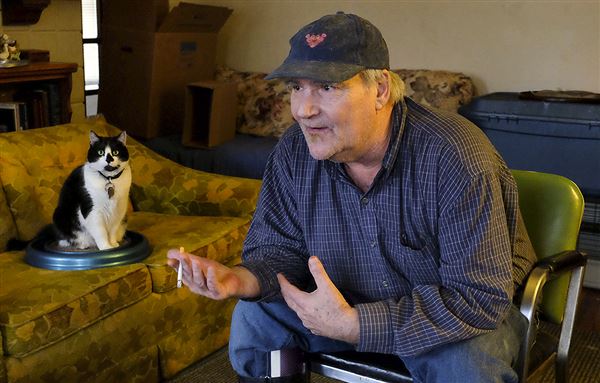
Emotional Support Animal Harp

Photo courtesy: The Blade

The Hope and Recovery Pets (HARP) is a program that provides rescued emotional support animals to mentally challenged individuals. A client of the program whose life has greatly changed is a 62-year old veteran named Robert Samberg. He says that his best friend Kitty, a 5-year old cat, helps him be in touch with reality.

HARP was started by Susan Conda, a woman who had a passion for animals. She said that she wanted to help both homeless animals and people with chronic mental health problems. To date, ProMedica, a non-profit healthcare system, is working to expand HARP so it can help more individuals.

Janet Hoy-Gerlach, an associate professor in the social work program at the University of Toledo who worked with Conda to establish the pilot program, said that the presence of emotional support animals has benefits to their owners. These benefits include relief of depression and anxiety, increase in motivation, lower blood pressure, and more.

Without HARP, Samberg wouldn’t be able to afford an ESA such as Kitty. The program is responsible for Kitty’s food and other expenses such as veterinary care. Samberg is grateful. He says, “I depend on HARP and they’re always there. It’s really reassuring that someone cares enough to help. I can’t tell you enough how happy I am with HARP. They are wonderful people.”

Article and image source: The Blade

Are you an owner of an assistance animal?

The Service Animal Registry of California invites you to have your assistance animal registered in order to designate its status. We also encourage you to take our online classes so you can be fully aware of your rights and gain more knowledge about your support animal.

Finally, we present to you our book entitled, “ASSISTANCE ANIMAL LAWS: LEARN YOUR RIGHTS REGARDING SERVICE ANIMALS, EMOTIONAL SUPPORT ANIMALS, THERAPY PETS, AND OTHER DOGS, CATS, AND ASSISTANCE ANIMALS” to provide you with a complete education on assistance animals.

Purchase your copy of the book by clicking the text or image below.

ASSISTANCE ANIMAL LAWS: LEARN YOUR RIGHTS REGARDING SERVICE ANIMALS, EMOTIONAL SUPPORT ANIMALS, THERAPY PETS, AND OTHER DOGS, CATS, AND ASSISTANCE ANIMALS

Assistance_animal_laws_6 (1)

Findings reveal positive effects of emotional support animals on families and individuals

ESA

Maggie O’Haire is an assistant professor at Purdue who studied the impact of service dogs on families. According to the four-year study, people who were in the company of a service dog had lesser worries and were able to perform their day-to-day activities better. This was especially true for families and individual owners.

Because service dogs are trained, they are able to provide immense physical support to their owners. For example, a disabled person who has wobbly feet can reach out to his service dog to regain balance. People with psychological problems are also able to have better coping mechanisms with the presence of a service animal.

Maggie O’Haire mentions that additional findings from similar research can further benefit the health and well-being of pet owners as well as their service dogs. Findings will spark the development of programs that aim to strengthen the relationship between these animals and their owners.

Article source: Menafn.com

Are you an owner of an assistance animal?

The Service Animal Registry of California invites you to have your assistance animal registered in order to designate its status. We also encourage you to take our online classes so you can be fully aware of your rights and gain more knowledge about your support animal.

Finally, we present to you our book entitled, “ASSISTANCE ANIMAL LAWS: LEARN YOUR RIGHTS REGARDING SERVICE ANIMALS, EMOTIONAL SUPPORT ANIMALS, THERAPY PETS, AND OTHER DOGS, CATS, AND ASSISTANCE ANIMALS” to provide you with a complete education on assistance animals.

Purchase your copy of the book by clicking the text or image below.

ASSISTANCE ANIMAL LAWS: LEARN YOUR RIGHTS REGARDING SERVICE ANIMALS, EMOTIONAL SUPPORT ANIMALS, THERAPY PETS, AND OTHER DOGS, CATS, AND ASSISTANCE ANIMALS

Assistance_animal_laws_6 (1)

Do exotic species qualify as Emotional Support Animals?

Tarantula

Emotional Support Animals can be other species in addition to dogs and horses. You may be wondering whether exotic species qualify. Examples of Exotic Animals include the following:

  • Turtles
  • Pot-Belly Pigs
  • Tarantulas
  • Rodents
  • Snakes
  • Ostriches
  • Goats
  • Marsupials/Monkeys
  • Iguanas
  • Alligators

The answer is MAYBE. The law is not explicit or clear on this issue.

If this question comes up in future lawsuits or regulations, it will very likely come down to two issues: (1) safety and (2) reasonable need, but this is just an educated guess.

While it is impossible to know for sure how a lawsuit or enforcement would turn out, an owner using an exotic species or breed for an Emotional Support Animal would likely need to address these issues:

  • Whether the chosen species or breed presents a health hazard to others (i.e., a poisonous spider or full-blood wolf).
  • Whether there is a reasonable need to have that particular type of animal that a more traditional animal such as a dog, cat, or rabbit would not equally fulfill.

Are you an owner of an assistance animal?

The Service Animal Registry of California invites you to have your assistance animal registered in order to designate its status. We also encourage you to take our online classes so you can be fully aware of your rights and gain more knowledge about your support animal.

Finally, we present to you our book entitled, “ASSISTANCE ANIMAL LAWS: LEARN YOUR RIGHTS REGARDING SERVICE ANIMALS, EMOTIONAL SUPPORT ANIMALS, THERAPY PETS, AND OTHER DOGS, CATS, AND ASSISTANCE ANIMALS” to provide you with a complete education on assistance animals.

Purchase your copy of the book by clicking the text or image below.

ASSISTANCE ANIMAL LAWS: LEARN YOUR RIGHTS REGARDING SERVICE ANIMALS, EMOTIONAL SUPPORT ANIMALS, THERAPY PETS, AND OTHER DOGS, CATS, AND ASSISTANCE ANIMALS

Assistance_animal_laws_6 (1)

Are therapy animals covered by laws and regulations?

esa rabbit

The answer is NO. Therapy animals are not covered by ADA disability laws, FHAA fair housing laws, or Federal transportation regulations.

This means that owners of therapy animals do not have the following rights associated with their therapy animals:

  • No rights to public access. Each location must agree to have the therapy animal visit, but is not obligated to grant access unless it wants to.
  • No right to accompany its owner on commercial flights. The animal can travel with its owner following the general rules for pets, but does not have any special rights under ADA or transportation regulations.
  • No right for housing accommodations by landlords and hotels. The animal would be treated as an ordinary pet when it comes to housing, and a landlord or hotel can impose whatever restrictions it has in place for pets.

These restrictions are correct if the therapy animal helps other people at school, hospitals, and other locations, but the owner/handler is not himself or herself disabled.

Are you an owner of an assistance animal?

The Service Animal Registry of California invites you to have your assistance animal registered in order to designate its status. We also encourage you to take our online classes so you can be fully aware of your rights and gain more knowledge about your support animal.

Finally, we present to you our book entitled, “ASSISTANCE ANIMAL LAWS: LEARN YOUR RIGHTS REGARDING SERVICE ANIMALS, EMOTIONAL SUPPORT ANIMALS, THERAPY PETS, AND OTHER DOGS, CATS, AND ASSISTANCE ANIMALS” to provide you with a complete education on assistance animals.

Purchase your copy of the book by clicking the text or image below.

ASSISTANCE ANIMAL LAWS: LEARN YOUR RIGHTS REGARDING SERVICE ANIMALS, EMOTIONAL SUPPORT ANIMALS, THERAPY PETS, AND OTHER DOGS, CATS, AND ASSISTANCE ANIMALS

Assistance_animal_laws_6 (1)

What are the five things you need to know about Service Animals?

Service animal

Some people rely on service animals to provide them with daily support for specific medical conditions. If you don’t own a service animal, you may have some questions about what these animals do and whether they are allowed in the synagogue (Jewish place of worship).

Below are five common questions about service animals and their corresponding answers.

1. What is the definition of a service animal?

A service animal is an animal (usually a dog) that’s specially trained to help a person with a disability perform tasks that he cannot do himself. A common scenario is a blind man assisted by a trained service dog.

2. What is the role of a service animal?

Service animals can take on different roles and that includes detecting abnormal blood sugar levels (for diabetics), alerting people with hearing problems, picking up items for those with mobility problems, and more.

3. Is a service animal allowed in the synagogue?

Though the ADA states that service animals are allowed to accompany their owners in public spaces, synagogues are not covered under the ADA. This means that a service animal is not permitted in the synagogue unless there is an event that’s open to the public.

4. Can you feed and pet another person’s service animal?

Whether another person’s service animal wears a vest or not, you always need to ask permission from the owner before touching or speaking to the animal. Remember that a service animal is not considered a pet and is obligated to its owner.

5. What if you encounter a disruptive service animal?

A service animal should be well-behaved and obedient to its owner’s commands. If the animal disrupts others by barking or wandering around and the owner does not do anything about it, you may request for the animal to be removed.

Article source: Chabad.org

Are you an owner of an assistance animal?

The Service Animal Registry of California invites you to have your assistance animal registered in order to designate its status. We also encourage you to take our online classes so you can be fully aware of your rights and gain more knowledge about your support animal.

Finally, we present to you our book entitled, “ASSISTANCE ANIMAL LAWS: LEARN YOUR RIGHTS REGARDING SERVICE ANIMALS, EMOTIONAL SUPPORT ANIMALS, THERAPY PETS, AND OTHER DOGS, CATS, AND ASSISTANCE ANIMALS” to provide you with a complete education on assistance animals.

Purchase your copy of the book by clicking the text or image below.

ASSISTANCE ANIMAL LAWS: LEARN YOUR RIGHTS REGARDING SERVICE ANIMALS, EMOTIONAL SUPPORT ANIMALS, THERAPY PETS, AND OTHER DOGS, CATS, AND ASSISTANCE ANIMALS

Assistance_animal_laws_6 (1)

DNA result proves service dog’s innocence

Jeb is a gentle, peaceful dog and a service animal of a veteran named Ken. Ken is affected with a neurodegenerative disease and Jeb helps him get up whenever he falls down.

In August 2016, Jeb was accused of killing a neighbor’s pomeranian. Christopher Sawa, the neighbor, looked out his window one morning and saw Jeb standing over the lifeless body of his dog. The Animal Control was contacted and Jeb was put into custody.

Jeb was put on trial and both parties gathered at district court in St. Clair County. If Judge Michael Hulewicz would declare Jeb a dangerous animal, he would be put to death. Ken admitted that Jeb and his other three dogs had gotten away from him on that same morning but they ran in the opposite direction of Sawa’s home.

Jeb’s family requested to have Jeb’s DNA tested to see whether his DNA matched the DNA in the pomeranian’s wound. The process cost $416. Results came out it was proved that Jeb is innocent. The DNA result revealed that another animal had killed Sawa’s dog. Jeb was allowed to go home and Ken’s family promised to have a secure fence to keep their dogs in the yard.

Article source: Fox17online.com

Are you an owner of an assistance animal?

The Service Animal Registry of California invites you to have your assistance animal registered in order to designate its status. We also encourage you to take our online classes so you can be fully aware of your rights and gain more knowledge about your support animal.

Finally, we present to you our book entitled, “ASSISTANCE ANIMAL LAWS: LEARN YOUR RIGHTS REGARDING SERVICE ANIMALS, EMOTIONAL SUPPORT ANIMALS, THERAPY PETS, AND OTHER DOGS, CATS, AND ASSISTANCE ANIMALS” to provide you with a complete education on assistance animals.

Purchase your copy of the book by clicking the text or image below.

ASSISTANCE ANIMAL LAWS: LEARN YOUR RIGHTS REGARDING SERVICE ANIMALS, EMOTIONAL SUPPORT ANIMALS, THERAPY PETS, AND OTHER DOGS, CATS, AND ASSISTANCE ANIMALS

Assistance_animal_laws_6 (1)

A university student finds support and protection in service animal

Photo courtesy: Gainesvilletimes.com

Photo courtesy: Gainesvilletimes.com

Taylor Fleming is a University of North Georgia student who suffers from anxiety attacks. She had a very difficult time in her life until her therapist advised her to have her puppy named Fleming trained to help her handle her attacks.

Thankful that Ryder has her back, Fleming said, “He can always tell, like he senses my personality. When I cry he loves to lick the tears off my face and he whimpers like he’s crying, too,” She adds that she considers Ryder her best friend.

Pawsitive Practice was the organization that provided Ryder with basic training such as sitting, picking up his leash, and handing it to Fleming. After 3 months of training, Fleming received Ryder’s certification as a Service Animal, a card, and jacket.

Fleming claims that some people tend to be rude about her situation. These people ask whether the teenager only bought the jacket online so she could bring her dog anywhere. According to Sylvia Carson, communications director for UNG, using a service animal is a civil right. Moreover, a service animal is not required to use a special jacket.

Article source: Gainesvilletimes.com

Are you an owner of an assistance animal?

The Service Animal Registry of California invites you to have your assistance animal registered in order to designate its status. We also encourage you to take our online classes so you can be fully aware of your rights and gain more knowledge about your support animal.

Finally, we present to you our book entitled, “ASSISTANCE ANIMAL LAWS: LEARN YOUR RIGHTS REGARDING SERVICE ANIMALS, EMOTIONAL SUPPORT ANIMALS, THERAPY PETS, AND OTHER DOGS, CATS, AND ASSISTANCE ANIMALS” to provide you with a complete education on assistance animals.

Purchase your copy of the book by clicking the text or image below.

ASSISTANCE ANIMAL LAWS: LEARN YOUR RIGHTS REGARDING SERVICE ANIMALS, EMOTIONAL SUPPORT ANIMALS, THERAPY PETS, AND OTHER DOGS, CATS, AND ASSISTANCE ANIMALS

Assistance_animal_laws_6 (1)

Emotional service animals ease stress of students from Penn campus

Emotional service animals ease stress

Photo courtesy: Julio Sosa / The Daily Pennsylvanian

There isn’t much scientific evidence that supports the effectiveness of Emotional Service Animals, but a lot of people have benefited from their presence. This is especially true for college students at Penn.

Sarah Holland is a college junior who experienced depression. She has found comfort in Toast, a feline Emotional Service Animal and a resident of Harrison College House. Holland, together with her roommates, found Toast from a nearby shelter and decided to adopt her.

Holland mentions that her friends who feel stressed would often come to spend time with Toast and feel better later on. Aside from Holland and her friends, other groups at Penn bring their dogs and cats with them on campus during finals to help ease their stress.

Unlike Service Animals that require training, Emotional Support Animals only need a physician’s recommendation.

Article source: The Daily Pennsylvanian

Are you an owner of an assistance animal?

The Service Animal Registry of California invites you to have your assistance animal registered in order to designate its status. We also encourage you to take our online classes so you can be fully aware of your rights and gain more knowledge about your support animal.

Finally, we present to you our book entitled, “ASSISTANCE ANIMAL LAWS: LEARN YOUR RIGHTS REGARDING SERVICE ANIMALS, EMOTIONAL SUPPORT ANIMALS, THERAPY PETS, AND OTHER DOGS, CATS, AND ASSISTANCE ANIMALS” to provide you with a complete education on assistance animals.

Purchase your copy of the book by clicking the text or image below.

ASSISTANCE ANIMAL LAWS: LEARN YOUR RIGHTS REGARDING SERVICE ANIMALS, EMOTIONAL SUPPORT ANIMALS, THERAPY PETS, AND OTHER DOGS, CATS, AND ASSISTANCE ANIMALS

Assistance_animal_laws_6 (1)

Where are you allowed to take your assistance animal in public places?

Under the Americans with Disabilities Act (ADA), access must be granted in public places to Service Animals but not for Emotional Support Animals or Therapy Animals. These places of public accommodation include parks, schools, beaches, restaurants, movie theaters, sports arenas, libraries, museums, retail stores, and other locations.

Places of public accommodation must allow Service Animals to accompany their disabled owner/handler. Emotional Support Animals are permitted only under the location’s own rules which are sometimes the same rules the provider has for ordinary pets. ESA access is not legally required.

Are you an owner of an assistance animal?

The Service Animal Registry of California invites you to have your assistance animal registered in order to designate its status. We also encourage you to take our online classes so you can be fully aware of your rights and gain more knowledge about your support animal.

Finally, we present to you our book entitled, “ASSISTANCE ANIMAL LAWS: LEARN YOUR RIGHTS REGARDING SERVICE ANIMALS, EMOTIONAL SUPPORT ANIMALS, THERAPY PETS, AND OTHER DOGS, CATS, AND ASSISTANCE ANIMALS” to provide you with a complete education on assistance animals.

Purchase your copy of the book by clicking the text or image below.

ASSISTANCE ANIMAL LAWS: LEARN YOUR RIGHTS REGARDING SERVICE ANIMALS, EMOTIONAL SUPPORT ANIMALS, THERAPY PETS, AND OTHER DOGS, CATS, AND ASSISTANCE ANIMALS

Assistance_animal_laws_6 (1)

Can you travel with your assistance animal by bus or train?

Under the Americans with Disabilities Act (ADA), accommodation must be made for Service Animals but not for Emotional Support Animals or Therapy Animals.

Transit providers must allow Service Animals to accompany their disabled owner/handler. Emotional Support Animals are permitted only under the transit provider’s own rules which are sometimes the same rules the provider has for ordinary pets. Emotional Support Animals access is not legally required.

Are you an owner of an assistance animal?

The Service Animal Registry of California invites you to have your assistance animal registered in order to designate its status. We also encourage you to take our online classes so you can be fully aware of your rights and gain more knowledge about your support animal.

Finally, we present to you our book entitled, “ASSISTANCE ANIMAL LAWS: LEARN YOUR RIGHTS REGARDING SERVICE ANIMALS, EMOTIONAL SUPPORT ANIMALS, THERAPY PETS, AND OTHER DOGS, CATS, AND ASSISTANCE ANIMALS” to provide you with a complete education on assistance animals.

Purchase your copy of the book by clicking the text or image below.

ASSISTANCE ANIMAL LAWS: LEARN YOUR RIGHTS REGARDING SERVICE ANIMALS, EMOTIONAL SUPPORT ANIMALS, THERAPY PETS, AND OTHER DOGS, CATS, AND ASSISTANCE ANIMALS

Assistance_animal_laws_6 (1)