How Pet Parents Can Get Ready for a Storm

preparing for a storm

Pets cannot be ready for a hurricane season – but you can, as a pet owner. Tampa Bay, known for its dedication to our four-legged friends, offers helpful hurricane pet preparedness tips:

1. Find a pet-friendly place as early as possible.

Now is the best time to contact friends and family who can welcome you and your pet. If they own pets too, it’s important for your pet and their pet to get along before a storm. Also, make a list of pet-friendly hotels and boarding facilities along with their phone numbers and pet policies.

2. Bring your pet’s records with you.

Should your pet end up in a shelter, make sure to safely store his or her records. Shelters will require you to present vaccination records and proof of your pet’s rabies shot. Also, take a recent photo of your pet so that you can use that should you get separated.

3. Prepare all necessary supplies.

Don’t expect facilities to have everything that your pet needs. Be responsible for securing your pet’s food, water, bowl, medications, and other supplies that can last for up to two weeks. Keep your pet comfortable and calm by bringing his or her plush toy.

Article source: tampabay.com

Do you own an assistance animal? Register your pet. 

The Service Animal Registry of California invites you to have your assistance animal registered in order to designate its status. We also encourage you to take our online classes so you can be fully aware of your rights and gain more knowledge about your support animal.

Finally, we present to you our book entitled, “ASSISTANCE ANIMAL LAWS: LEARN YOUR RIGHTS REGARDING SERVICE ANIMALS, EMOTIONAL SUPPORT ANIMALS, THERAPY PETS, AND OTHER DOGS, CATS, AND ASSISTANCE ANIMALS” to provide you with a complete education on assistance animals.

Purchase your copy of the book by clicking the image below.

Reasons to Get an Emotional Support Pet Today

reasons to get an esa

Emotional Support Animals are defined under the Fair Housing Amendments Act of 1988 (FHAA). They can be dogs, cats, miniature horses, and other species or breeds. If you are suffering from a mental disability, having an emotional support pet by your side can greatly help.

It’s no secret that emotional support pets can serve as best friends in tough times. They decrease your stress levels, help reduce your blood pressure, enable you to calm down when you’re feeling anxious, and help you to maintain a healthier lifestyle.

Do you own an assistance animal? Register your pet. 

The Service Animal Registry of California invites you to have your assistance animal registered in order to designate its status. We also encourage you to take our online classes so you can be fully aware of your rights and gain more knowledge about your support animal.

Finally, we present to you our book entitled, “ASSISTANCE ANIMAL LAWS: LEARN YOUR RIGHTS REGARDING SERVICE ANIMALS, EMOTIONAL SUPPORT ANIMALS, THERAPY PETS, AND OTHER DOGS, CATS, AND ASSISTANCE ANIMALS” to provide you with a complete education on assistance animals.

Purchase your copy of the book by clicking the image below.

Helpful Tips for Flying with an Emotional Support Animal

flying with esa

Being able to travel with your emotional support animal for the first time is an exciting experience. But at the same time, it requires detailed advanced planning. There are countries that are strict in allowing emotional support animals. Some airlines also impose restrictions due to the recent rise of in-flight complaints.

The first thing you can do as a handler is to make sure that your airline of choice will permit your animal to fly with you. Call them ahead of time and ask about their policies. If your pet will have to stay in the cargo, ensure comfort to the animal by providing the right traveling crate.

Do you own an assistance animal? Register your pet. 

The Service Animal Registry of California invites you to have your assistance animal registered in order to designate its status. We also encourage you to take our online classes so you can be fully aware of your rights and gain more knowledge about your support animal.

Finally, we present to you our book entitled, “ASSISTANCE ANIMAL LAWS: LEARN YOUR RIGHTS REGARDING SERVICE ANIMALS, EMOTIONAL SUPPORT ANIMALS, THERAPY PETS, AND OTHER DOGS, CATS, AND ASSISTANCE ANIMALS” to provide you with a complete education on assistance animals.

Purchase your copy of the book by clicking the image below.

Learn the Actual Benefits of Emotional Support Animals

emotional support animal benefits

People who are suffering from a mental health condition can get back on their feet with the help of an emotional support animal (ESA). Those who feel alone in their lives may feel loved and accompanied. A beautiful relationship with an emotional support animal reduces mental health symptoms. If you’re wondering how they help, here are the ways:

1. ESAs trigger the increase of serotonin levels. 

ESAs are like antidepressants in that petting them or simply looking into their eyes triggers positive emotions. Your stress lowers.

2. They are a source of unconditional love. 

Some people struggle to find love in others. One can form a meaningful bond with an ESA, and this will serve as a stepping stone in improving the person’s relationships with people.

3. They work in conjunction with other treatments. 

Whether a person takes medication or follows a therapy, an ESA makes a great addition to bring out the best results. Remember that ESAs are not a treatment. Rather, they’re used as support.

Article source: bustle.com

Do you own an assistance animal? Register your pet. 

The Service Animal Registry of California invites you to have your assistance animal registered in order to designate its status. We also encourage you to take our online classes so you can be fully aware of your rights and gain more knowledge about your support animal.

Finally, we present to you our book entitled, “ASSISTANCE ANIMAL LAWS: LEARN YOUR RIGHTS REGARDING SERVICE ANIMALS, EMOTIONAL SUPPORT ANIMALS, THERAPY PETS, AND OTHER DOGS, CATS, AND ASSISTANCE ANIMALS” to provide you with a complete education on assistance animals.

Purchase your copy of the book by clicking the image below.

Ways Emotional Support Animals Make You Feel Better

animals provide comfort

Emotional support animals are the kind of assistance animals that help people cope with mental health problems like PTSD, depression, and anxiety. Just petting an emotional support animal will trigger the release of your body’s feel-good hormones.

If you want to know how these animals make you feel better, here are the ways:

  • ESAs help ease feelings of isolation. They’ll always remain by your site no matter what — on good days and bad days. The best thing about these animals is that they’re there for you without judgment.
  • You follow a daily routine. As an emotional support animal owner, you need to take your dog outside for exercise. You meet its needs. That, in turn, benefits you.
  • ESAs provide stress relief. Whenever you take your emotional support dog out for a walk, you also get exercise. Exercise reduces your stress and improves your mood.

Article source: newsgram.com

Do you own an assistance animal? Register your pet. 

The Service Animal Registry of California invites you to have your assistance animal registered in order to designate its status. We also encourage you to take our online classes so you can be fully aware of your rights and gain more knowledge about your support animal.

Finally, we present to you our book entitled, “ASSISTANCE ANIMAL LAWS: LEARN YOUR RIGHTS REGARDING SERVICE ANIMALS, EMOTIONAL SUPPORT ANIMALS, THERAPY PETS, AND OTHER DOGS, CATS, AND ASSISTANCE ANIMALS” to provide you with a complete education on assistance animals.

Purchase your copy of the book by clicking the image below.

How Emotional Support Animals Help Kids and Teens

teenager and dog

Some kids and teens are diagnosed with trauma or mental disorders. While the conventional route is to give medications to them, it’s no secret that emotional support animals are a therapeutic solution. If you have a kid or teenage whose struggling with some life complication, here are the ways that a support animal can help him or her:

  • Increase their activity levels – Yes, emotional support animals get your children moving. Since animals need play, your kids can play with them too. This boost in activity is essential to your child’s health and well-being.
  • Offers companionship and affection – Emotional support pets can be your kids’ true friends. They provide affection when other people can’t. Sometimes, kids who don’t open up to their peers do so with their emotional support pet.
  • Gives Smiles – Emotional support pets bring smiles to everyone’s faces. They give kids and teenagers a reason to be happy about.

Do you own an assistance animal? Register your pet. 

The Service Animal Registry of California invites you to have your assistance animal registered in order to designate its status. We also encourage you to take our online classes so you can be fully aware of your rights and gain more knowledge about your support animal.

Finally, we present to you our book entitled, “ASSISTANCE ANIMAL LAWS: LEARN YOUR RIGHTS REGARDING SERVICE ANIMALS, EMOTIONAL SUPPORT ANIMALS, THERAPY PETS, AND OTHER DOGS, CATS, AND ASSISTANCE ANIMALS” to provide you with a complete education on assistance animals.

Purchase your copy of the book by clicking the image below.

Things First-Time Dog Owners Should Know Before They Bring Their Furry Friend Home

first time dog owners tips

Getting a new dog is exciting especially to people who are doing it for the very first time. There are things that first-time homeowners deserve to know to make the transition easier and ensure the success of the experience. Veterinarian Sarah Evans, DVM, shares these tips below:

Mix 75% of the dog’s old diet with 25% of the new diet for a few days.

To prevent gastrointestinal problems, a dog owner should not suddenly introduce a new diet. Mixing previous food with the new food helps the dog adjust. Dr. Evans says that within 2 weeks, the dog should be fully adjusted. She also recommends buying high-quality dog food for sensitive stomachs.

Enroll your pup in a puppy class to receive behavioral training.

Training puppies to behave can be frustrating. Basic training programs allow pets to socialize with other dogs. To increase your pup’s motivation, reward him with a treat after a good behavior. Along with the healthy treat, provide praise.

Walk your dog at least once a day for 30 minutes.

Stay-at-home pets require more movement, so walking them for half an hour each day lets them complete their exercise needs. But take note that this can vary depending on the breed. Supervision, while the dog is at play, is a must to prevent mishaps.

Be well-prepared when traveling.

If you are to go on a road trip with your dog, feed him 2 hours before the trip to avoid nausea. You wouldn’t want motion sickness to prevent your dog from enjoying the experience. When it comes to air travel, you need to know airline rules and rules that govern assistance animals, if you happen to own one.

Article source: Refinery 29

Do you own an assistance animal? Register your pet. 

The Service Animal Registry of California invites you to have your assistance animal registered in order to designate its status. We also encourage you to take our online classes so you can be fully aware of your rights and gain more knowledge about your support animal.

Finally, we present to you our book entitled, “ASSISTANCE ANIMAL LAWS: LEARN YOUR RIGHTS REGARDING SERVICE ANIMALS, EMOTIONAL SUPPORT ANIMALS, THERAPY PETS, AND OTHER DOGS, CATS, AND ASSISTANCE ANIMALS” to provide you with a complete education on assistance animals.

Purchase your copy of the book by clicking the text or image below.

Making Reasonable Accommodations for Emotional Support Animals

emotional support animals reasonable accommodations

You’ve probably heard about emotional support animals. Emotional support animals such as dogs provide companionship and comfort to people who are suffering from mental and emotional conditions. Examples of these conditions are PTSD, depression, anxiety, and bipolar disorder. Making great companions, emotional support animals assist psychologically disabled individuals so they can live a fuller, more meaningful life.

Take note that emotional support animals can be any type of animal. What matters is that adopting this animal won’t violate local or state laws.

Over the last five years, there has been an increase in the number of requests to bring along emotional support animals in facilities, including those that have a “no pet policy.” These include condominiums, rental housing, and universities. After all, the Fair Housing Amendments Act (FHAA) prohibits any form of discrimination against emotional support animals and their owners.

Now that more requests are being made to accommodate ESAs, it’s important that property managers know how to address these requests. Denial of these legitimate requests can lead to legal consequences.

The Process of Making a Request to Grant an Accommodation

As mentioned earlier, your emotional support animal has the right to live with you even in a housing or building that has a “no pets” policy. The first step to living in a housing with your ESA is to create a written request that notifies the landlord, property manager, or association (for condominiums) of your disability.

Also, your request needs to be accompanied by a letter from a licensed medical practitioner specifying the need for the emotional support animal. This letter helps demonstrate your disability, and that your landlord has the right to ask for this piece of documentation. Let’s say that you are receiving medical treatment for depression. Your physician will be specifying in the letter that your emotional support animal offers you the assistance you need to perform even the most basic activities of daily living.

letter for esa

Landlords, property managers, and homeowners associations need to realize that not all disabilities are obvious. Emotional support animals usually cater to people with disabilities that are psychological and emotional in nature. The absence of signs of disability does not imply that a request made by the individual can be denied.

What If Your Request Is Denied?

Once the association receives your letter request and they evaluate it, they can now decide whether to approve or disapprove your request.

What should you do if, in case, they deny your request? You may then file a complaint with state agencies. They will review your complaint to determine whether the reason for the disapproval of your request is discrimination. If there is indeed discrimination, you can file a lawsuit against the association. On the other hand, the association will need to explain why they denied your reasonable request.

The Abuse of “Emotional Support” Animals

While emotional support animals help people with disabilities by providing companionship and assistance, many people tend to abuse their use. There are travel restrictions for animals, and this alone has led to the increase in the number of people claiming to have a disability so they can travel with their “emotional support” animal without extra fees.

plane travel with esa

Because when it comes to traveling, airlines require an ESA letter issued by a physician within the same year of travel. It would help to find out what an airline’s expectations are. It was recently announced that Delta and American Airlines now require additional documentation from ESA owners. They now do this to keep fake ESA owners at bay.

Are you an owner of an assistance animal?

The Service Animal Registry of California invites you to have your assistance animal registered in order to designate its status. We also encourage you to take our online classes so you can be fully aware of your rights and gain more knowledge about your support animal.

Finally, we present to you our book entitled, “ASSISTANCE ANIMAL LAWS: LEARN YOUR RIGHTS REGARDING SERVICE ANIMALS, EMOTIONAL SUPPORT ANIMALS, THERAPY PETS, AND OTHER DOGS, CATS, AND ASSISTANCE ANIMALS” to provide you with a complete education on assistance animals.

Purchase your copy of the book by clicking the text or image below.

ASSISTANCE ANIMAL LAWS: LEARN YOUR RIGHTS REGARDING SERVICE ANIMALS, EMOTIONAL SUPPORT ANIMALS, THERAPY PETS, AND OTHER DOGS, CATS, AND ASSISTANCE ANIMALS

assistance animal laws


Restaurant owner asked customer to show proof of her seizure alert dog

seizure alert dog

Savanah Overtruf, a Loveland woman, is a regular customer of a restaurant. She visits the place weekly with her mother and her service dog, Liea, who alerts Overtruf before she experiences seizure attacks. Overtruf has been diagnosed with schizophrenia, depression, migraines, and Tourette syndrome.

Overtruf was surprised because one Tuesday night, the restaurant owner, Khai Tran, suddenly asked her to show proof that Liea was a real service dog. Tran told Overtruf that he can service her for that night but next time, she must show him proof of her service dog. When interviewed by CBS4’s Jeff Todd, Overtruf said,  “When something like this happens it makes me feel lesser in my community.”

It’s common for business owners to misunderstand assistance animal laws. While Khan was only concerned about people bringing fake service animals to his restaurant, experts state that asking for proof of a service animal is against the ADA and Colorado Anti-Discrimination laws. Restaurants are allowed to ask assistance animal owners only 2 questions: 1) “Is the animal required because of your disability?” and 2) “What task does it perform?”

Overtruf said that adherence to the law is important for her and other service animal owners. She would love to go back to the restaurant and simply wants the owner to know that what he did was against the law.

Article source: CBS Denver

Are you an owner of an assistance animal?

The Service Animal Registry of California invites you to have your assistance animal registered in order to designate its status. We also encourage you to take our online classes so you can be fully aware of your rights and gain more knowledge about your support animal.

Finally, we present to you our book entitled, “ASSISTANCE ANIMAL LAWS: LEARN YOUR RIGHTS REGARDING SERVICE ANIMALS, EMOTIONAL SUPPORT ANIMALS, THERAPY PETS, AND OTHER DOGS, CATS, AND ASSISTANCE ANIMALS” to provide you with a complete education on assistance animals.

Purchase your copy of the book by clicking the text or image below.

ASSISTANCE ANIMAL LAWS: LEARN YOUR RIGHTS REGARDING SERVICE ANIMALS, EMOTIONAL SUPPORT ANIMALS, THERAPY PETS, AND OTHER DOGS, CATS, AND ASSISTANCE ANIMALS

War veteran filed a lawsuit against his landlord

war veteran and service dog

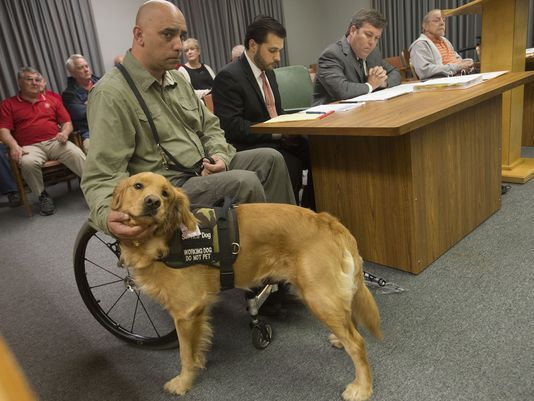
Army veteran Matthew Kopcsak has been paralyzed by a roadside bomb blast in Iraq in 2004. He claims that his landlord named Roger Dale Register violated his right to have a service dog accompany him in his rented home. Kopcsak filed the lawsuit in the U.S. District Court after waiting for more than 18 months for the other civil lawsuit he filed in Santa Rosa County Court to be resolved.

However, Register said that he is exempted from the federal Fair Housing Act since he only owns one rental property. He adds that the act only applies to those who own three or more properties. At the time that Kopcsak was to sign the rental agreement, Register made it clear that he wouldn’t allow any dogs.

The federal lawsuit states that Kopcsak has experienced shame and embarrassment, as well as psychological distress, emotional and economic damages as a result of being deprived of his right to have a service animal in his home.

Register also happens to be a war veteran. He said that the dispute has also aggravated his physical disabilities and gave his family heartache and sleepless nights.

Article source: Pnj.com

Are you an owner of an assistance animal?

The Service Animal Registry of California invites you to have your assistance animal registered in order to designate its status. We also encourage you to take our online classes so you can be fully aware of your rights and gain more knowledge about your support animal.

Finally, we present to you our book entitled, “ASSISTANCE ANIMAL LAWS: LEARN YOUR RIGHTS REGARDING SERVICE ANIMALS, EMOTIONAL SUPPORT ANIMALS, THERAPY PETS, AND OTHER DOGS, CATS, AND ASSISTANCE ANIMALS” to provide you with a complete education on assistance animals.

Purchase your copy of the book by clicking the text or image below.

ASSISTANCE ANIMAL LAWS: LEARN YOUR RIGHTS REGARDING SERVICE ANIMALS, EMOTIONAL SUPPORT ANIMALS, THERAPY PETS, AND OTHER DOGS, CATS, AND ASSISTANCE ANIMALS